
MIAMI SUNSET GUIDE: BEST TIMES, LOCATIONS & PHOTOGRAPHY TIPS
Miami’s sunsets are legendary—and for good reason. The combination of tropical location, warm water, developed skyline, and clear skies creates some of the most stunning sunsets in North America.
But experiencing a truly unforgettable Miami sunset isn’t random luck. It’s about understanding when to be there, whereto stand, what conditions to look for, and how to capture it.
This guide breaks down the science, timing, locations, and photography techniques to help you experience or photograph a perfect Miami sunset.
Quick Facts:
- Best sunset season: October-April (dry, clearer skies)
- Peak intensity: 15-20 minutes before sunset
- Average sunset time in summer: 8:15 PM
- Average sunset time in winter: 6:20 PM
- Time variation: Nearly 2 hours between shortest and longest days
- Best photography window: 20-30 minutes before sunset through 10 minutes after
________________________________
What You’ll Learn
- The science behind Miami’s stunning sunsets (why they’re so colorful)
- Exact sunset times for every month
- Seasonal patterns and variations
- The 7 best locations ranked by beauty
- Weather conditions that create the most spectacular sunsets
- Photography techniques and camera settings
- Which months have the most dramatic sunsets
- How to plan your sunset experience
________________________________
Part 1: The Science of Miami Sunsets
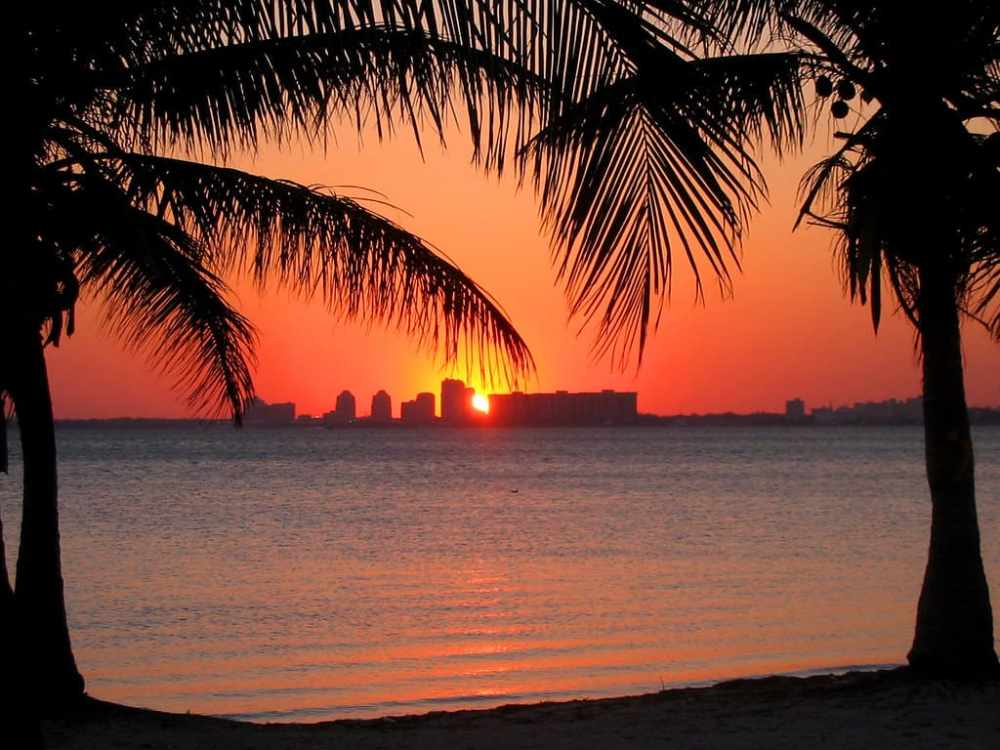
Why Are Miami Sunsets So Colorful?
Miami’s sunsets are dramatically more colorful than many other places. Understanding why helps you appreciate what you’re seeing and predict when the best sunsets will happen.
The basic physics:
When the sun is low on the horizon, light travels through much more of Earth’s atmosphere than when the sun is overhead. This longer path through the atmosphere scatters blue and green wavelengths of light, leaving behind the longer wavelengths: reds, oranges, and yellows.
This is called Rayleigh scattering and it’s the same phenomenon that makes the sky blue during the day.
But Miami has extra ingredients that make sunsets more dramatic:
1. Tropical Moisture in the Air
Miami’s tropical climate means the air is often saturated with water vapor. This moisture:
- Reflects and refracts light in complex ways
- Creates more vibrant color gradients
- Produces more cloud formations (which catch the light)
- Intensifies red and orange hues
Comparison:
- Desert sunset (Arizona): Clear, but flatter colors (less moisture to reflect light)
- Tropical sunset (Miami): Richer, more saturated colors (moisture amplifies light scattering)
2. Ocean Reflection
The Atlantic Ocean covering 270° of Miami’s horizon:
- Reflects the sunset colors upward (doubling the visual intensity)
- Creates a “mirror effect” that extends the color show
- Provides a calm, flat surface that emphasizes the colors
- Produces the “golden path” of light on water (the sun’s reflection)
Why ocean sunsets are better than city sunsets: A sunset over water shows you the colors twice—once in the sky, once reflected on the water. A sunset over a city shows colors in the sky but they’re absorbed by buildings and streets.
3. Atmospheric Particles (Dust & Aerosols)
Dust particles in the air:
- Act as scattering particles, enhancing color
- Create more cloud formations
- Amplify the color intensity
Interesting fact: Days after Saharan dust events (summer), Miami sunsets are even MORE colorful. The dust from Africa travels across the Atlantic and increases atmospheric particles.
4. Latitude (Tropical Location)
Miami sits at 25°N latitude, which means:
- The sun never gets directly overhead (compared to equator at 0°)
- The sun’s path across the sky during sunset is at an angle that maximizes the atmosphere thickness
- Tropical latitudes have higher humidity (more moisture for light scattering)
5. Low Pollution (Compared to Other Major Cities)
While Miami has pollution, it’s cleaner than many coastal cities. Moderate pollution can actually enhance sunset colors (particles to scatter light), but too much dims them. Miami hits the sweet spot.
________________________________
The Colors: What You’re Actually Seeing
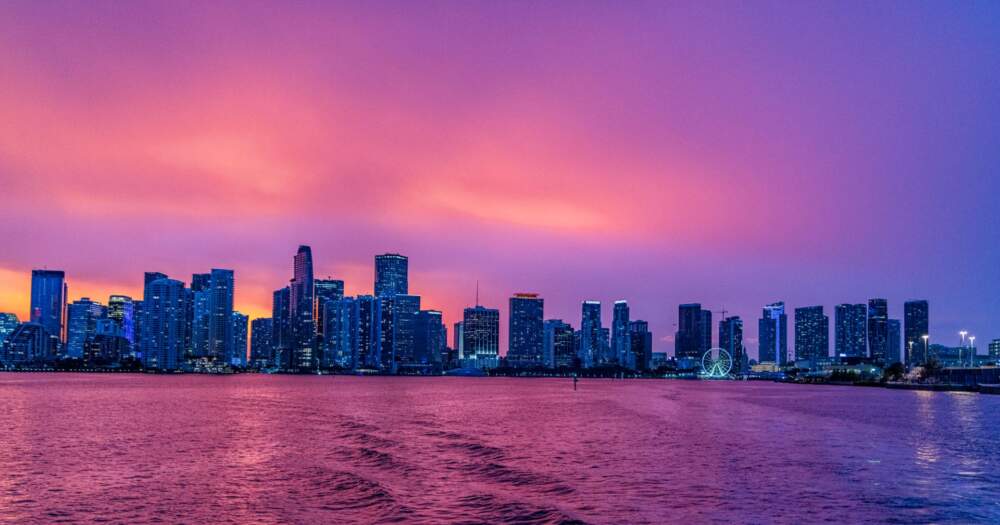
As the sun descends, the colors change in a predictable sequence:
6:00 PM – Sun at 15° above horizon:
- Sky color: Light blue fading to lighter blue/white near horizon
- Sun color: Yellow-orange
- Clouds: Catch golden light on their undersides
6:15 PM – Sun at 10° above horizon:
- Sky color: Deep blue above, transitioning to orange/pink near horizon
- Sun color: Deep orange
- Clouds: Dramatic orange/red silhouettes
- Water: Golden-orange reflection
6:25 PM – Sun at 3° above horizon (PEAK COLOR):
- Sky color: Deep purple/magenta above, hot pink/orange on horizon
- Sun color: Deep red-orange (nearly at horizon)
- Clouds: Brilliant gold, pink, purple, red
- Water: Intense orange/red reflection
- This is the peak 5-10 minute window for photography
6:30 PM – Sun touching horizon:
- Sky color: All warm colors (orange, pink, red, purple)
- Sun color: Blood red (at horizon line)
- Clouds: Maximum color intensity
- Water: Mirror of the dramatic sky
6:35 PM – Sun dipping below horizon:
- Sky color: Purple, pink, orange gradient
- Remaining light: Warm amber/orange
6:40 PM – Sun below horizon (TWILIGHT begins):
- Sky color: Purple, blue, pink gradient
- Quality of light: Softer, more diffused
- Duration: Twilight lasts 20-30 minutes depending on season
________________________________
The Golden Hour vs. Blue Hour
The Golden Hour:
- Occurs in the last 1-2 hours before sunset
- Characterized by warm, diffused, directional light
- Creates soft, flattering light (great for photography)
- Colors are warm (golden, orange, amber)
- Sky is still bright enough to see details
- Duration in Miami: About 60-90 minutes depending on season
The Blue Hour:
- Occurs after sunset, during twilight
- Characterized by cool blue light (sun is below horizon, but light scatters in upper atmosphere)
- Creates moody, dramatic atmosphere
- Colors are cool (blue, purple, dark orange)
- Perfect for city/skyline photography
- Duration in Miami: 20-40 minutes depending on season
Best times:
- Photography: Golden hour (last 30-60 minutes before sunset)
- Viewing: Peak color (15-20 minutes before sunset through 10 minutes after)
- Romantic experience: Blue hour (10-30 minutes after sunset)
________________________________
Part 2: Exact Sunset Times by Month (2024-2026)
Miami’s sunset times vary significantly throughout the year due to Earth’s axial tilt.
Sunset Time Reference Chart
| Month | Date | Time | Sun Altitude | Duration Golden Hour |
|---|---|---|---|---|
| January | 15th | 5:45 PM | ~30 minutes | 90 min |
| February | 15th | 6:05 PM | ~35 minutes | 85 min |
| March | 15th | 6:25 PM | ~40 minutes | 80 min |
| April | 15th | 6:45 PM | ~45 minutes | 75 min |
| May | 15th | 7:05 PM | ~50 minutes | 70 min |
| June | 21st (Summer solstice) | 8:31 PM | ~55 minutes | 65 min |
| July | 15th | 8:25 PM | ~54 minutes | 65 min |
| August | 15th | 8:10 PM | ~50 minutes | 68 min |
| September | 15th | 7:45 PM | ~45 minutes | 72 min |
| October | 15th | 7:15 PM | ~38 minutes | 78 min |
| November | 15th | 6:40 PM | ~32 minutes | 85 min |
| December | 21st (Winter solstice) | 5:25 PM | ~28 minutes | 95 min |
Key observations:
- Earliest sunset: December 1st (5:23 PM)
- Latest sunset: June 22nd (8:32 PM)
- Total variation: 3 hours 9 minutes between shortest and longest days
- Longest golden hour: December-January (90+ minutes)
- Shortest golden hour: June-July (65 minutes)
________________________________
Part 3: Seasonal Patterns & Sky Clarity
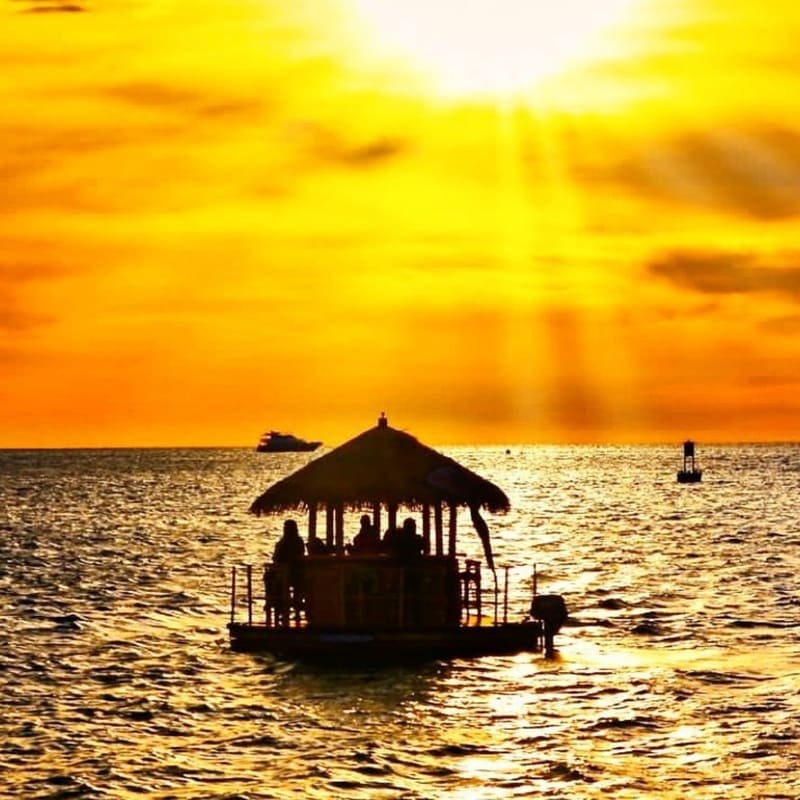
Best Sunset Seasons (Ranked)
TIER 1: October-November (BEST)
- Clarity: Excellent (summer humidity breaking down, before winter rain)
- Color intensity: Dramatic (clearing skies, good atmospheric particles)
- Cloud coverage: Variable but often scattered (ideal for photography)
- Wind: Moderate (waves add texture to water reflections)
- Visibility: 8-12 miles
- Temperature: 78-85°F (perfect for being outside)
- Crowds: Medium (not peak tourist season yet)
TIER 2: February-April (VERY GOOD)
- Clarity: Very good (winter weather pattern = less humidity)
- Color intensity: Rich but sometimes less saturated than fall
- Cloud coverage: Often partly cloudy (beautiful dramatic clouds)
- Wind: Variable
- Visibility: 8-10 miles
- Temperature: 72-80°F
- Crowds: High (peak tourist season)
TIER 3: December-January (GOOD BUT COOLER)
- Clarity: Good (winter patterns)
- Color intensity: Good (though sometimes cooler-toned)
- Cloud coverage: Often clear (less dramatic cloud formations)
- Wind: Occasional strong winds (can add texture)
- Visibility: 6-10 miles
- Temperature: 65-75°F (cool for tropical area)
- Crowds: Very high (holidays)
TIER 4: May-September (VARIABLE)
- Clarity: Hazy (high humidity, moisture, afternoon thunderstorms)
- Color intensity: Variable but can be stunning after rain clears
- Cloud coverage: Often heavy (thunderstorms common)
- Wind: Variable
- Visibility: 4-8 miles (worst of the year)
- Temperature: 82-92°F (very hot/humid)
- Crowds: Low (but weather unreliable)
Weather Conditions That Create Perfect Sunsets
Perfect sunset conditions:
- ✓ Clear sky (0-30% cloud coverage)
- ✓ Scattered clouds on horizon (30-50% coverage) — creates multi-colored sky
- ✓ Some high-altitude clouds above (layers create gradient)
- ✓ Low humidity (8-15 inches of visibility = clearer)
- ✓ Light to moderate wind (creates water texture, but not too rough)
- ✓ No pollution/haze (clear visibility)
- ✓ Recent rain that cleared (cleans atmosphere of dust)
Worst sunset conditions:
- ✗ Complete cloud coverage (blocks entire sunset)
- ✗ Heavy humidity (washes out colors)
- ✗ Haze/air quality alerts (dims colors)
- ✗ Calm water (mirror reflection too perfect, looks unnatural)
- ✗ Low clouds (blocks sunset color show)
How to predict perfect sunsets:
- Check weather: Look for “clear” or “partly cloudy” not “mostly cloudy”
- Check air quality: AirNow.gov or AQI app (lower is better)
- Check humidity: Below 70% is ideal
- Check visibility: Weather apps often show this
- Check time: Aim for 20-30 minutes BEFORE sunset (peak color)
________________________________
Part 4: The 7 Best Sunset Locations in Miami (Ranked)
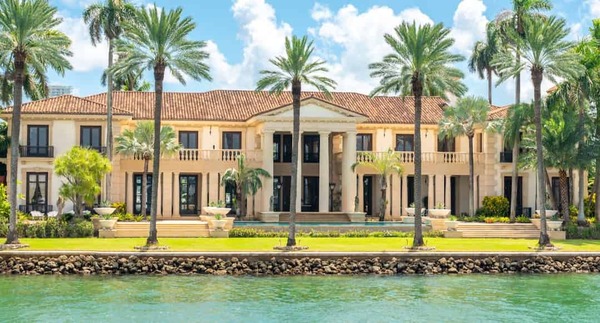
#1: Millionaire’s Row (Miami Beach) — THE ICONIC SUNSET
The location: South Pointe Park to Indian Beach (Miami Beach’s eastern waterfront, facing west)
Why it’s #1:
- Direct, unobstructed ocean view facing directly west (sun sets over water)
- Luxury waterfront homes in background (dramatic silhouette against sunset)
- Wide beach for viewing (not crowded in right spots)
- Perfect vantage point (sun reflects on water toward you)
- Instagram-famous (legitimate amazing sunset, not just hype)
Best spot: South Pointe Park jetty (the southern tip of South Pointe)
Crowds: Medium-high in peak season, low in off-season
Best time: Arrive 45 minutes before sunset, leave 20 minutes after
Parking: Metered parking in South Pointe Park, street parking on Collins Ave, paid lots nearby
Camera settings: Wide angle lens (16-35mm), ISO 200-800, f/2.8-5.6, shutter 1/125-1/500 (adjust for exposure)
Pro tip: Go 10 minutes before sunset for the best combination of sky color + sun visibility
________________________________
#2: Biscayne Bay From a Boat (PREMIUM EXPERIENCE)
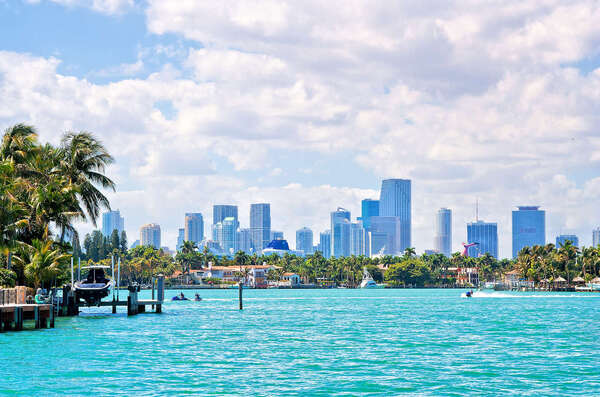
Miami skyline and Biscayne Bay during a February boat tour
The location: Any boat in the middle of Biscayne Bay facing west at sunset
Why it’s amazing:
- 360° unobstructed view (no land blocking)
- Sun reflects directly toward you on water (golden path on water)
- Calm, flat water = perfect mirror for colors
- Elevation = perspective (see above the city)
- No crowds (you’re on water)
- Moving vantage point creates dynamic experience
Best boats:
- Miami On The Water sunset cruises (professional guides, smooth sailing)
- Private boat rental (total control)
- Kayak in calm bay (quieter, more intimate)
Crowds: None (you’re on water)
Best time: Depart 60 minutes before sunset, position yourself facing west 30 minutes before
Cost: $75-150 for sunset cruise, $200-400 for boat rental
Pro tip: Bring a wide-angle lens and shoot the sunset with the city skyline in the background
________________________________
#3: Vizcaya Museum & Gardens — FORMAL ELEGANCE
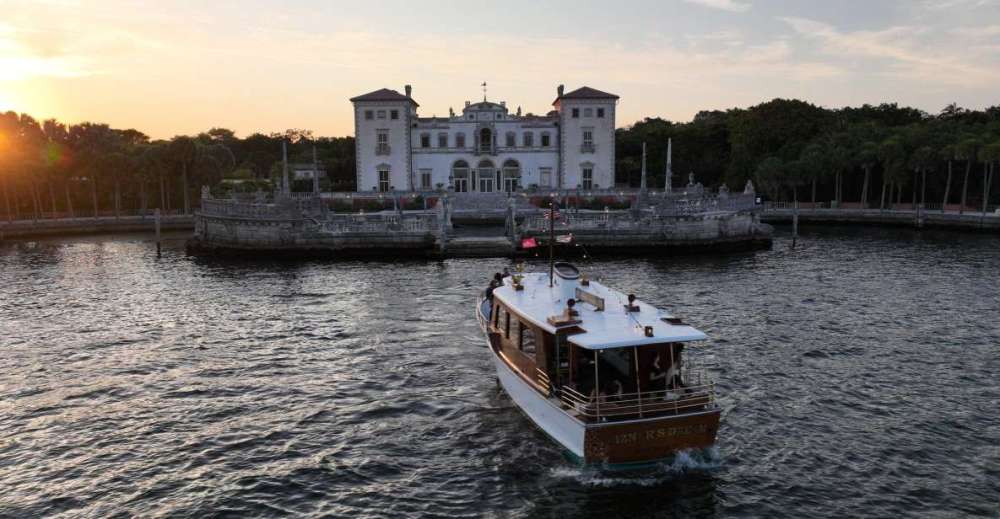
Miami: Vizcaya Sunset Cruise – Miami on the Water
The location: 3251 S Miami Ave (Vizcaya Museum, southern view over bay)
Why it’s beautiful:
- Historic Italian Renaissance villa as foreground (architectural beauty + sunset)
- Formal gardens (composed, elegant framing)
- Views over Biscayne Bay (water reflection)
- Less crowded than South Pointe (more peaceful)
- Sophisticated atmosphere
Best spot: South lawn overlooking the bay
Crowds: Low-medium (but check museum hours—closes at sunset, outdoor areas may be limited)
Best time: Visit late afternoon, explore gardens, settle in 30 minutes before sunset
Cost: Museum admission $21 (check if open during sunset hours)
Photography: Medium focal length (35-50mm) to include villa + sunset + bay
Pro tip: Go earlier in day, explore beautiful grounds, then stay for sunset. Worth the admission.
________________________________
#4: Coconut Grove Waterfront — LOCAL FAVORITE
The location: Coconut Grove, multiple waterfront parks (Peacock Park, The Grove waterfront)
Why it’s special:
- Village atmosphere (restaurants, shops, walkable)
- Tropical trees frame the sunset (palm silhouettes beautiful)
- Calm, protected water (bay, not ocean)
- Fewer tourists than South Pointe (more local vibe)
- Combination of dining + sunset
Best spots:
- Peacock Park south lawn
- Grove waterfront promenade
- Restaurant patios with water views
Crowds: Medium (popular local hangout)
Best time: Arrive early for dinner at a waterfront restaurant, watch sunset while eating
Cost: Free viewing, restaurant meals $15-40
Dining recommendations: Literally dozens of waterfront restaurants with sunset views
Pro tip: Eat dinner facing west, watch sunset as appetizers arrive. Romance guaranteed.
________________________________
#5: Key Biscayne — NATURAL BEAUTY
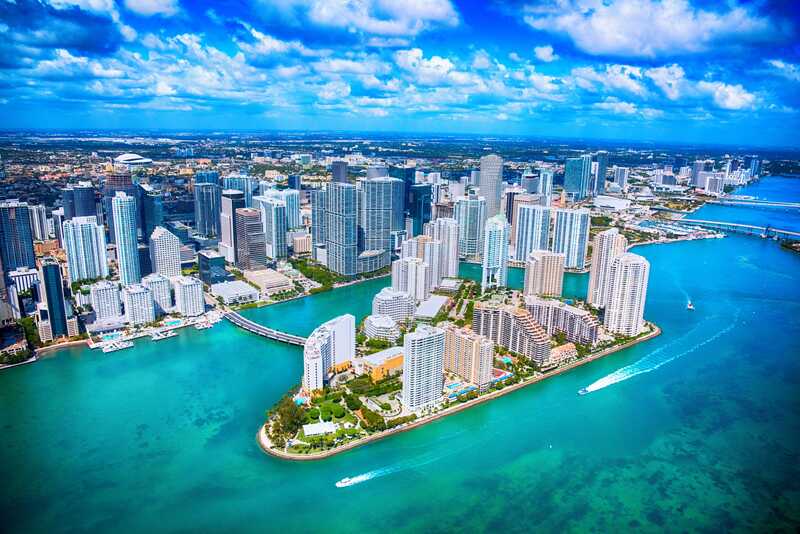
The location: Bill Baggs Cape Florida State Park or Crandon Park Beach (Key Biscayne)
Why it’s beautiful:
- Natural beach (less developed than Miami Beach)
- Mangroves & sea grapes frame sunset (tropical vegetation)
- Less crowded (15-20 minutes drive from downtown)
- Protected park area (feels removed from city)
- Clear, natural views
Best spots:
- Bill Baggs Cape Florida State Park (southern tip, lighthouse)
- Crandon Park Beach (northern Key Biscayne, wide beach)
Crowds: Low (but parking can be limited in peak season)
Best time: Arrive 1-2 hours before sunset, explore the park, settle in 20 minutes before
Cost: Free for Crandon Park, $2 entry for Bill Baggs State Park
Parking: Ample parking at both locations
Pro tip: Walk to the lighthouse at Bill Baggs, watch sunset from there. Iconic photo opportunity.
________________________________
#6: Wynwood Walls / Urban Sunset — EDGY & MODERN
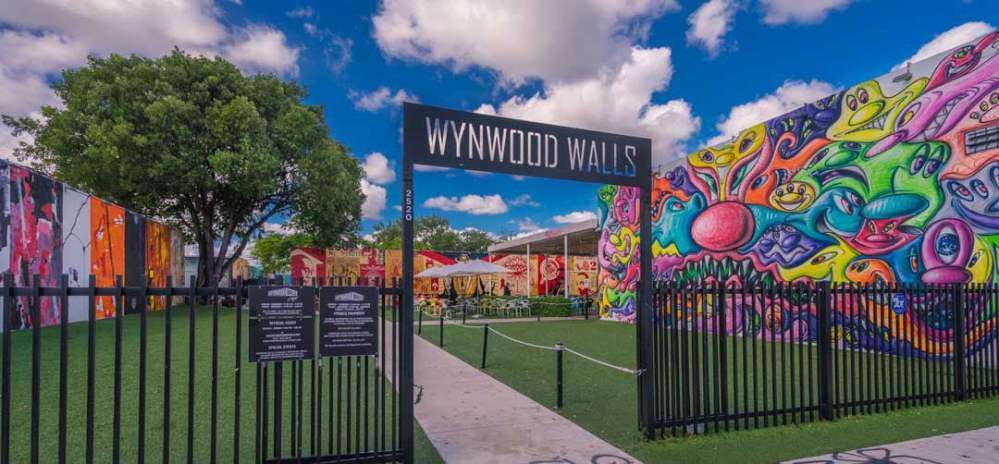
Entrance to Wynwood Walls with vibrant murals and blue sky.
The location: Wynwood neighborhood (24th-26th St, NW 2nd-5th Ave)
Why it’s different:
- Street art murals + sunset (urban meets natural beauty)
- Interesting foreground compositions (not just sky + water)
- Trendy neighborhood (galleries, restaurants, bars nearby)
- Unique photography (sunset + art = creative shots)
- Fewer people looking at sunsets (more intimate)
Best spots:
- Rooftop bars in Wynwood (Graffiti Junktion, Skylight Bar)
- Muros murals district (specific street art walls)
- Open parking lots with southern exposure
Crowds: Medium-high (Wynwood is popular, but fewer people watching sunset specifically)
Best time: Early evening, explore galleries, grab rooftop drink, watch sunset
Cost: Free viewing, drinks $5-12 at bars
Photography: Standard focal length (24-50mm) to include art + sky + sunset
Pro tip: Shoot the street art in foreground with sunset sky behind it. Unique compositions.
________________________________
#7: Oleta River State Park — HIDDEN GEM
The location: Oleta River State Park (3400 NE 163rd St, North Miami Beach)
Why it’s special:
- Mangrove forest (natural, undeveloped)
- River + sunset (different perspective than ocean)
- Peaceful, quiet (few tourists know about this spot)
- Kayak access (explore by paddle)
- Nature photography opportunity
Best spots:
- North overlook area
- Kayak through mangroves facing west
Crowds: Very low (hidden gem status)
Best time: Arrive early afternoon, kayak through mangroves, position for sunset 30 min before
Cost: Park entry $2 per vehicle, kayak rental $10/hour
Photography: Standard focal length, shoot through mangrove framing
Pro tip: Rent kayak, paddle to quiet spot in mangroves, watch sunset from water level. Peaceful & scenic.
________________________________
Part 5: Photography Guide (Camera Settings & Techniques)
Camera Basics for Sunset Photography
Best time to start shooting:
- Begin: 45-60 minutes before sunset
- Peak: 15-20 minutes before through 10 minutes after sunset
- Finish: 30-40 minutes after sunset (blue hour still has color)
Equipment you’ll need:
- Camera (DSLR, mirrorless, or smartphone)
- Wide-angle lens (14-35mm preferred)
- Neutral density filter (optional, for longer exposures)
- Tripod (optional, but helps in low light)
- ND filter (blocks some light, allows slower shutter speeds)
________________________________
Camera Settings by Phase
Phase 1: Golden Hour (60-30 min before sunset)
Light conditions: Warm, directional, plenty of light
Settings:
- ISO: 100-200 (lots of light)
- Aperture: f/4-f/8 (wide enough for shutter speed, narrow enough for depth)
- Shutter: 1/250-1/500 (adjust for exposure)
- White balance: Daylight or Cloudy (6500-7500K) — warm looks better than auto
- Focus: Manual or auto on horizon
- Exposure compensation: -0.5 to -1 (slightly underexpose to preserve colors)
Why these settings:
- Low ISO keeps image clean
- f/4-f/8 keeps foreground and sky both in focus
- Fast shutter avoids blur
- Warm white balance enhances natural colors
- Slight underexposure makes colors more saturated
Phase 2: Peak Color (20 min before to 10 min after)
Light conditions: Rapidly changing, increasingly dramatic, dimmer
Settings:
- ISO: 400-1600 (light is dimming)
- Aperture: f/2.8-f/5.6 (wider for more light)
- Shutter: 1/100-1/250 (getting slower as light fades)
- White balance: Cloudy (7000K) or Custom (this is when white balance matters most)
- Focus: Manual focus on horizon (AF may hunt in low light)
- Exposure compensation: -1 to -1.5 (more underexposure to preserve colors)
Why these settings:
- Higher ISO compensates for dimmer light
- Faster aperture gathers more light
- Manual focus prevents AF hunting
- More underexposure keeps colors vibrant (not washed out)
Phase 3: Blue Hour (10-40 min after sunset)
Light conditions: Moody, cool tones, dim
Settings:
- ISO: 1600-3200 (very dim light)
- Aperture: f/1.4-f/2.8 (very wide for maximum light)
- Shutter: 1/30-1/125 (much slower, may need tripod)
- White balance: Cloudy or Tungsten (7000-8000K for cool tones)
- Focus: Manual focus (AF won’t work in dim light)
- Exposure compensation: 0 to -0.5 (less underexposure here, colors are naturally cool)
Why these settings:
- Very high ISO for dim light
- Very wide aperture (fast lens important here)
- Slower shutter OK if you have tripod
- Cool white balance enhances blue hour colors
- Less underexposure because we want to see the dim colors
________________________________
Specific Techniques for Stunning Sunset Photos
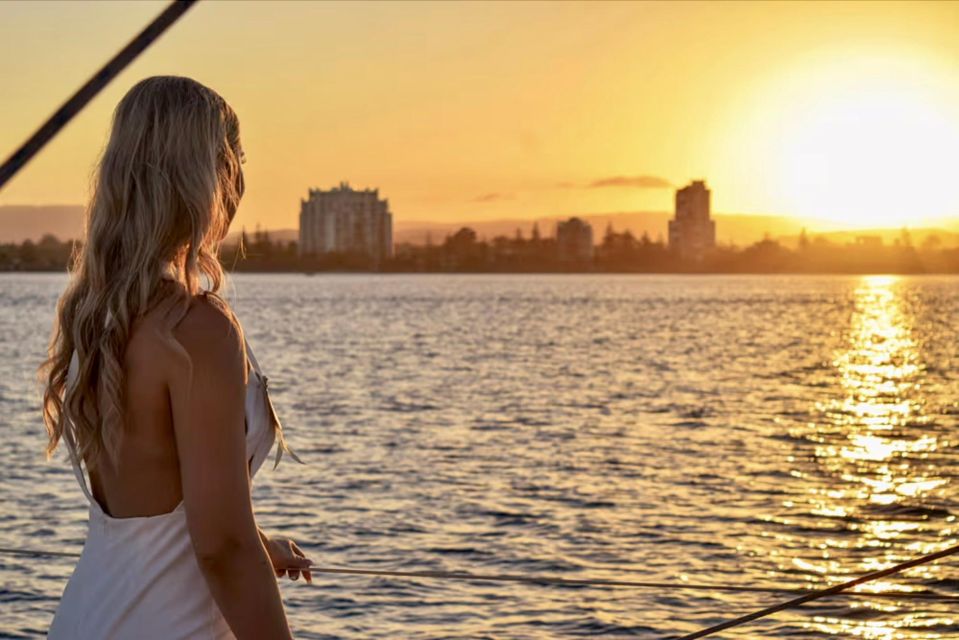
Vizcaya Sunset Cruise – Miami on the Water
Technique 1: The Golden Path Shot
What it is: Sun’s reflection on water creating a “golden path” toward camera
When to shoot: 15-20 minutes before sunset, position yourself with sun reflecting toward you
Settings:
- Wide angle lens (16-35mm)
- f/4-f/8
- ISO 200-400
- Shutter 1/200-1/500
- Underexpose by -1 stop
How to compose:
- Position yourself so sun’s reflection comes toward you (not away)
- Include foreground (people, boats, structures) as silhouette
- Use reflection as “leading line” to center of frame
- Include sky with color gradient above
Why it works: The golden path creates a natural leading line that draws viewer’s eye into the photo.
________________________________
Technique 2: The Silhouette Shot
What it is: Dark subjects in foreground against bright colorful sunset
When to shoot: 20-10 minutes before sunset (maximum contrast)
Settings:
- Standard to wide focal length (24-50mm)
- f/5.6-f/8
- ISO 100-200
- Shutter 1/200-1/500
- Expose for the sky, let foreground go dark
How to compose:
- Position interesting foreground (trees, buildings, people, boats) between camera and sunset
- Focus on foreground (it will be dark silhouette)
- Expose for the sky (not the foreground) — this creates the silhouette
- Include interesting shapes (palms, structures, people)
Why it works: Silhouettes create dramatic contrast and simplify the image (viewers focus on shape, not detail).
________________________________
Technique 3: The Color Gradient Shot
What it is: Emphasizing the color transition from hot colors (orange, red) near horizon to cool colors (blue, purple) above
When to shoot: Peak color time (10-20 minutes before sunset)
Settings:
- Wide angle lens (16-35mm)
- f/2.8-f/4 (wider is better here)
- ISO 400-800
- Shutter 1/125-1/250
- Underexpose by -1 to -1.5
How to compose:
- Shoot vertically (portrait mode) to capture full color gradient
- Position horizon in lower third of frame
- Fill upper two-thirds with colorful sky
- Include minimal foreground/water
Why it works: Vertical composition maximizes the dramatic color gradient from horizon to sky.
________________________________
Technique 4: The Sky Split Shot
What it is: Including both the colorful sunset sky AND its reflection in water
When to shoot: Any time during sunset window
Settings:
- Any focal length (wide angle best)
- f/4-f/8
- ISO 200-600
- Shutter 1/200-1/500
- Expose for sky, let water go slightly dark
How to compose:
- Position horizon in CENTER of frame (splits image in half)
- Top half = colorful sky
- Bottom half = reflection on water
- Use leading lines (docks, piers) to add visual interest
Why it works: Mirror composition with reflection is naturally appealing and shows off the water’s role in the sunset.
________________________________
Technique 5: The Telephoto Compression Shot
What it is: Using longer lens to compress sun and background, making sun appear larger
When to shoot: Last 5 minutes before sunset (sun must be visible, not too bright)
Settings:
- Telephoto lens (50-200mm+)
- f/5.6-f/8 (not too wide, to compress perspective)
- ISO 200-400
- Shutter 1/500-1/1000 (faster because of magnification)
- Underexpose by -2 (sun is very bright through telephoto)
How to compose:
- Use telephoto lens (50mm minimum, 100-200mm ideal)
- Frame sun large in frame
- Include recognizable background elements (buildings, silhouettes)
- Position sun offset from center (rule of thirds)
Why it works: Telephoto lenses compress distance, making background appear closer and sun appear larger relative to surroundings.
Warning: Don’t look directly at sun through telephoto lens (can damage eyes and sensor).
________________________________
Smartphone Photography Tips
iPhone/Android phones are surprisingly good for sunset photos:
Best practices:
- Use HDR mode (helps with exposure balance)
- Tap to focus on the horizon (not the bright sun)
- Swipe down to underexpose manually (enhance colors)
- Use Portrait mode if available (adds depth to image)
- Shoot vertically (portrait mode) for color gradients
- Wait for peak color (not right at sunset)
- Use free apps: Snapseed, Lightroom Mobile for editing
Limitations:
- Can’t change aperture/ISO (phone does it automatically)
- Lower detail in shadows/highlights than DSLR
- Smaller sensor = more noise in low light
- No optical zoom (digital zoom reduces quality)
Workaround:
- Shoot in good light (golden hour, peak color)
- Use leading lines/foreground interest
- Edit in post-processing (bring out colors)
________________________________
Part 6: Month-by-Month Sunset Calendar
Best Sunset Month Rankings
October:
Why: Clearest skies, humidity breaking down, dramatic clouds
Best time: 6:50-7:05 PM
Predicted quality: ⭐⭐⭐⭐⭐
November:
Why: Excellent clarity, first “cool” month, tourist season starting
Best time: 6:35-6:50 PM
Predicted quality: ⭐⭐⭐⭐⭐
April:
Why: Spring clarity, tolerable weather, varied clouds
Best time: 7:10-7:25 PM
Predicted quality: ⭐⭐⭐⭐
February:
Why: Winter weather patterns, clear skies, cool temps
Best time: 6:25-6:40 PM
Predicted quality: ⭐⭐⭐⭐
March:
Why: Spring approaching, good clarity, increasing temp
Best time: 6:40-6:55 PM
Predicted quality: ⭐⭐⭐⭐
May:
Why: Humidity increasing, variable clouds, still decent
Best time: 7:30-7:45 PM
Predicted quality: ⭐⭐⭐
January:
Why: Cooler, sometimes hazy, crowds high
Best time: 5:50-6:05 PM
Predicted quality: ⭐⭐⭐
December:
Why: Cooler, possible haze, crowded holidays
Best time: 5:30-5:45 PM
Predicted quality: ⭐⭐⭐
September:
Why: Humid, afternoon storms, variable quality
Best time: 7:35-7:50 PM
Predicted quality: ⭐⭐
August:
Why: Very humid, storms common, hazy
Best time: 8:00-8:15 PM
Predicted quality: ⭐⭐
July:
Why: Peak humidity, storms common, longest daylight
Best time: 8:15-8:30 PM
Predicted quality: ⭐⭐
June:
Why: Monsoon season, frequent storms, hazy
Best time: 8:25-8:40 PM
Predicted quality: ⭐
________________________________
Part 7: Experience It Like a Pro
Planning Your Perfect Sunset
If you have 1 hour:
- Arrive 30 minutes before sunset
- Choose one location (South Pointe Park or Coconut Grove)
- Shoot/watch for 30 minutes
- Leave 5 minutes after sunset
If you have 2 hours:
- Arrive 60 minutes before sunset
- Explore location + choose best vantage point
- Watch golden hour development
- Shoot/watch peak color (30 minutes)
- Stay for early blue hour
If you have 3+ hours (IDEAL):
- Arrive early afternoon
- Explore location fully
- Find perfect vantage point
- Watch entire golden hour
- Capture peak color (15-20 min window)
- Experience blue hour
- Dinner afterward
The Ultimate Sunset Experience: Private Boat
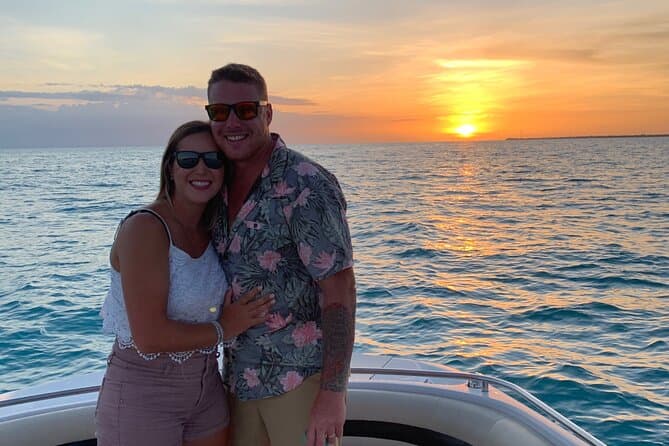
Private Miami Sunset Boat Tours – Miami On The Water
What makes it special:
- 360° unobstructed view
- Water reflection directly toward you
- No crowds (just you and guests)
- Professional narration (history, ecology)
- Smooth sailing (Biscayne Bay is protected)
- Professional crew (experienced with sunsets)
Best time: Depart 60 minutes before sunset, cruise with sun’s path
What to bring:
- Camera (wide-angle lens ideal)
- Sunglasses (protects eyes from sun reflection)
- Lightweight jacket (breeze on water)
- Drinks (some tours include, check)
Cost: $75-150 per person (group tours) to $500-2000+ (private charter)
Booking: Schedule in advance for peak season (October-April)
________________________________
Part 8: Sunset Photography Mistakes to Avoid
Mistake 1: Exposing for the sun
- Wrong: Sun looks natural but entire rest of photo is dark
- ✓ Correct: Expose for sky/water, let sun be bright spot
Mistake 2: Using auto white balance
- Wrong: White balance neutralizes warm colors (looks dull)
- ✓ Correct: Use Cloudy or Custom (7000K+) for warm tones
Mistake 3: Forgetting foreground interest
- Wrong: Just sky and water (boring)
- ✓ Correct: Include silhouettes, structures, people (adds depth)
Mistake 4: Shooting too late
- Wrong: Waiting until sun touches horizon (less colorful, fast changes)
- ✓ Correct: Shooting 20-15 minutes BEFORE sunset (peak color)
Mistake 5: Standing in the shade
- Wrong: Your foreground is silhouetted against sunset (you look dark)
- ✓ Correct: Position yourself in open with light on your face
Mistake 6: Over-processing in editing
- Wrong: Boosting saturation too high (looks fake)
- ✓ Correct: Subtle adjustments, enhance but don’t over-saturate
Mistake 7: Using wrong focal length
- Wrong: Standard focal length makes sunset appear small
- ✓ Correct: Use wide angle (16-35mm) to capture full scene
Mistake 8: Shooting in harsh noon light, not sunset light
- Wrong: Sunset photography only works during golden/blue hour
- ✓ Correct: Plan to shoot 60 minutes BEFORE sunset through 40 min AFTER
________________________________
FAQ: Miami Sunsets
Q: What’s the best month to see a Miami sunset? A: October-November. Clear skies, dramatic clouds, perfect temperature, excellent visibility.
Q: Is it better to watch sunset from the beach or a boat? A: Boat gives 360° unobstructed view with sun reflecting toward you. Beach offers easier access and ground stability for photography. Both are beautiful—boat is more premium.
Q: Can I predict if a sunset will be good? A: Yes, partially. Check weather (clear/partly cloudy), air quality (AQI), and humidity. Low humidity + scattered clouds = usually great sunset.
Q: What’s the difference between watching a sunset and photographing it? A: Watching: Enjoy the moment, be present, experience colors with human eye (which perceives more than cameras). Photographing: Focus on composition, lighting, settings—less immersive but creates lasting memory.
Q: Which lens is best for sunset photography? A: Wide angle (16-35mm) for full sky and scenery, or telephoto (100-200mm) to compress sun and background. Avoid ultra-wide (8-15mm) which makes sun too small.
Q: Does Miami have better sunsets than other beach cities? A: Yes, consistently. Combination of tropical moisture, ocean reflection, clear visibility, and developed skyline creates consistently dramatic sunsets.
Q: How does air pollution affect sunset colors? A: Moderate pollution actually enhances colors (more particles to scatter light). Heavy pollution washes out colors. Miami hits sweet spot—developed enough to have particles, clean enough to see colors.
Q: Is photography better with a professional camera or smartphone? A: Professional camera gives more control and better quality, but smartphone is surprisingly effective for sunsets if you use right techniques. Best camera is the one you have.
Q: Why is the blue hour after sunset? A: When sun is below horizon, light still exists high in atmosphere where blue wavelengths scatter more (no yellow/red to overwhelm them). Lasts 20-40 minutes depending on season.
Q: Should I use a filter for sunset photography? A: Neutral density filter (ND) allows slower shutter speeds for motion blur effects. Polarizing filter can reduce glare on water. Both optional but can improve results.
Q: When do I stop shooting sunset photos? A: Technically 40-60 minutes after sunset (blue hour still has beautiful color). Practically, when light is too dim to see without tripod, or when you’ve gotten the shots you want.
________________________________
Experience Miami’s Sunsets Fully
Miami’s sunsets are a natural wonder—one of the most consistent, dramatic, and beautiful sunsets in North America. Whether you’re a photographer trying to capture the perfect image or a visitor wanting to experience something unforgettable, understanding the science, timing, locations, and techniques makes all the difference.
The bottom line: The best sunset is the one you’re present for. Put down the camera occasionally, look up, appreciate the colors, and be grateful you’re seeing something that millions of people will never witness.
Next steps:
- Visit one of the 7 locations during October-November
- Arrive 45 minutes before sunset (not right at sunset)
- Bring a camera (DSLR or smartphone)
- Take the boat tour for the ultimate experience
- Share your sunset (tag @MiamiOnTheWater if you book with us)
________________________________
Next Experience
Want to experience a Miami sunset from the water?
Book a sunset cruise
Schedule a private yacht charter
Explore our sightseeing tours
Our professional crew knows the best angles, will navigate to the optimal position as the sun descends, and you’ll experience the sunset the way it’s meant to be seen—from the water.
This guide is updated seasonally with current sunset times and optimal viewing conditions. Last verified: July 07, 2026